
Editor’s note (April 2025): This article is part of Blog Herald’s editorial archive. Originally published in January 2005, it has been reviewed and updated to ensure accuracy and relevance for today’s readers.
At the start of 2005, a list of predictions about the future of blogging circulated widely enough to spark conversation across the early blogosphere. The original version of this article has shared ten predictions published here on January 1st of that year.
Twenty years on, it’s worth returning to that list. Not out of nostalgia, but because prediction lists are one of the few honest records of how an industry understood itself at a given moment. When you read them decades later, the gap between what people expected and what actually happened tells you something real about how platforms evolve, how power consolidates, and what creators keep getting wrong about the future.
Some of those 2005 predictions were strikingly accurate. Others were completely off. And a few were right in spirit but wrong in every specific detail — which is perhaps the most instructive category of all.
The predictions that aged well
The prediction that blog advertising would boom was directionally correct, even if the mechanism turned out to be very different from what anyone expected. In 2005, the assumption was that blog-specific ad networks would proliferate and compete. What actually happened was consolidation: Google’s acquisition of DoubleClick in 2007, the rise of programmatic advertising, and eventually the near-total dominance of Google AdSense and later the Facebook Ads ecosystem reshaped how bloggers monetized. The boom happened. The diversity didn’t.
The prediction about better blogs being acquired also proved accurate. What the 2005 list didn’t anticipate was the scale. By the late 2000s and into the 2010s, AOL was spending hundreds of millions acquiring blog networks. Demand Media, About.com, and eventually HuffPost changed hands at figures that would have seemed absurd in 2005. The trend continued with newsletters and YouTube channels in the 2020s — the specific medium shifted, but the underlying logic held.
Perhaps the most prescient prediction was about pooling resources and blog networks. Jason Calacanis’s Weblogs Inc. was already proving the model. What followed — Gawker Media, Vox Media, BuzzFeed, and eventually the Substack network model — showed that the instinct was right. Creators would seek leverage through collective infrastructure, even if the specific shape of that infrastructure kept changing.
The predictions that missed — and why it matters
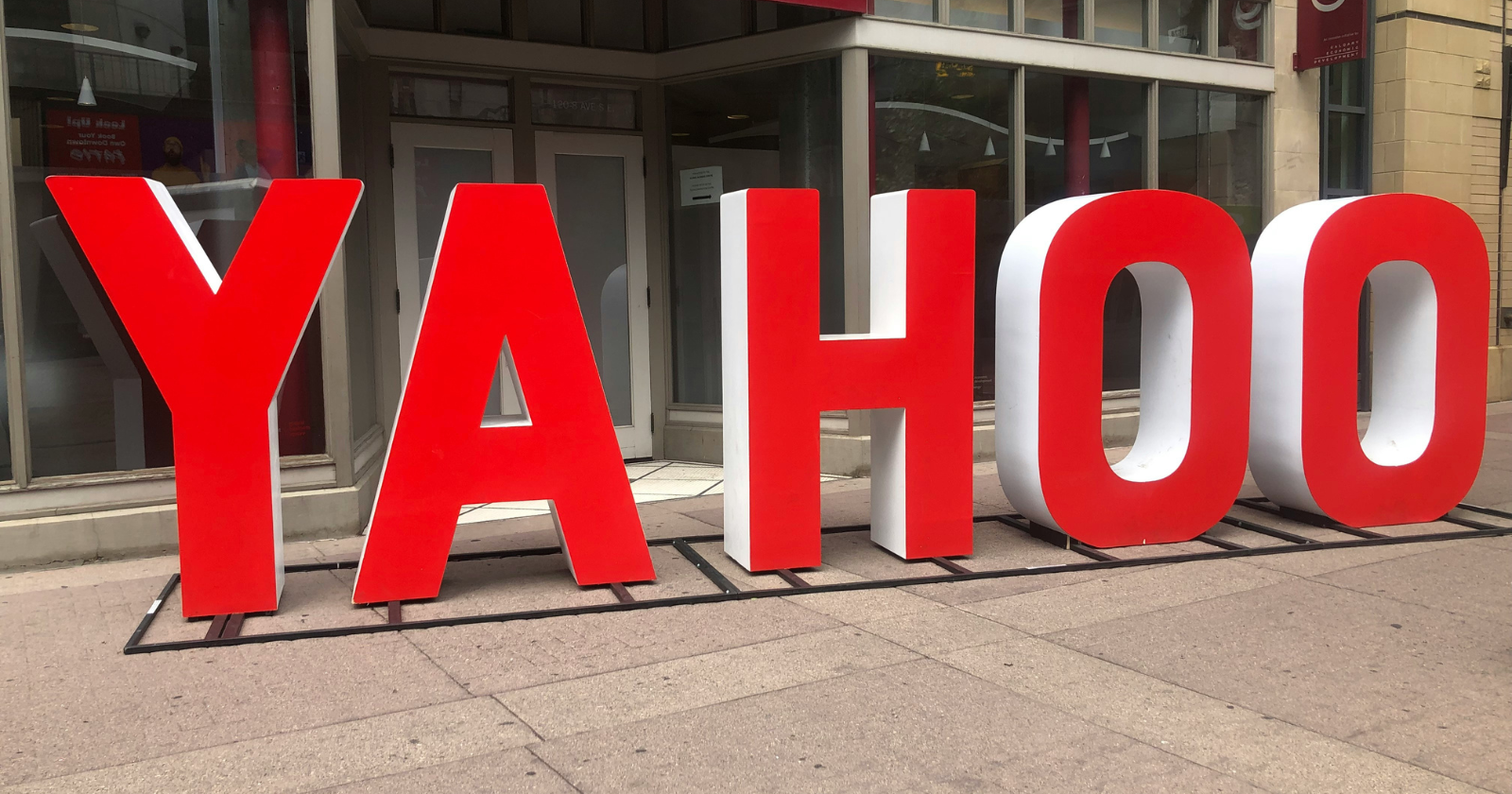
The Yahoo/TypePad acquisition never happened. Yahoo did eventually enter blogging more seriously with its acquisition of Tumblr in 2013 — for $1.1 billion — but it was too late to matter, and the integration was widely considered a failure. TypePad, the platform behind Six Apart, never became a major consumer product. Six Apart itself was broken up and sold off in pieces.
The prediction that a Blogging Association would form to represent bloggers never materialized in any meaningful way. This is worth sitting with. The instinct — that bloggers needed collective representation to navigate ethics debates, platform relationships, and public perception — was sound. But the structure never coalesced. Today, creator advocacy is fragmented across platform-specific communities, union efforts in adjacent industries, and individual influencers with large enough audiences to set their own terms. There is still no unified voice for independent content creators, and that absence has real consequences.
The prediction that blogs would get their own television show is technically true — various web-to-TV crossovers happened over the following decade — but the framing reveals something about how the medium was being imagined at the time. The assumption was that legitimacy would flow from old media to new. What actually happened was the reverse: the audience migrated, and traditional television spent the next fifteen years trying to understand why.
What the platform consolidation story actually looks like
The deeper pattern running through most of these predictions is a misread of how platform power would concentrate. In 2005, the blogosphere still felt genuinely distributed. Blogads, TypePad, Blogger, Movable Type — there were multiple competing ecosystems, and it wasn’t obvious which, if any, would dominate.
What followed was a consolidation that reshaped the entire content landscape. By the mid-2010s, Facebook’s algorithm changes alone could make or break a publisher’s traffic.We saw a systematic decline of independent digital publishers throughout this period. WordPress remained the one genuinely open platform at scale — today powering around 43% of all websites — but even WordPress-based publishers found themselves dependent on Google for discovery and Facebook for distribution.
The lesson isn’t that platforms are bad. It’s that dependency on any single platform is a structural vulnerability that independent creators consistently underestimate — and that the 2005 predictions, like most predictions of that era, didn’t fully reckon with.
The scam blog prediction: early signal, slow response
One prediction from the 2005 list that deserves more credit than it usually gets is the warning about scam blogs. The concern was that spammers and bad actors would establish fake blogs and services that would threaten the credibility of the medium as a whole.

This happened, and it happened badly. Splogs — spam blogs — proliferated throughout 2005 and 2006, gaming Google’s link algorithms and contributing directly to the SEO arms race that shaped content strategy for the next decade. The concern that “the actions of a few will continue to reflect the whole” proved accurate: the association between blogging and low-quality content persisted well into the 2010s, even for publishers doing serious work.
Today’s equivalent — AI-generated content farms, link schemes, and parasite SEO — is a direct descendant of that same dynamic. Google’s Helpful Content updates from 2022 onward have been, in part, a belated attempt to address what was already visible as a problem twenty years ago.
What a prediction list from 2005 can still teach you
Reading these predictions now, what strikes me most is not how wrong they were about the specifics, but how right they were about the pressures. The tension between independent creators and large platforms, the question of whether bloggers would ever have collective leverage, the threat of low-quality content to the credibility of the medium — these are not 2005 problems. They are structural features of the content economy that have simply taken different forms over time.
The useful habit isn’t to predict correctly. It’s to identify the underlying forces — platform dependency, quality dilution, consolidation versus distribution — and build your publishing strategy around those forces rather than around the specific tools that happen to be dominant right now.
The creators who’ve lasted from 2005 to today mostly share one quality: they never confused the platform with the audience. The platform changes. The audience, if you’ve built genuine trust with them, can follow you somewhere else.
That’s a lesson the 2005 predictions were already circling around, even if they couldn’t quite state it plainly. It’s more relevant now than it was then.